

by the OneCare Group Editorial Team
Addressing mental health concerns while at sea is crucial for fostering a supportive and productive environment with colleagues. Recognizing the signs of distress and taking the right steps to intervene can make a significant difference to someone’s well-being, and in some cases even prevent suicide. Mental health challenges can affect anyone, regardless of their protected characteristics and can impact on their performance, relationships, and overall morale. With the right approach, crew members can be encouraged to seek help and find support tailored to their needs.
Working at sea presents unique mental health challenges due to isolation, separation from loved ones, stressful conditions, long working hours, and limited access to support. Sometimes you may worry about someone and feel unsure about how to approach them or to show your compassion and support.
If you are concerned about a fellow crew member, you can follow these steps to intervene effectively:
Firstly, you have to recognize the signs. You can notice behavioral changes such as social withdrawal, increased irritability, or lapses in concentration, as well as any expressions of loneliness, homesickness, or stress. Consider whether your colleagues appear with physical changes as well; for example, have they been sleep deprived? Have they lost their appetite for food? Do they seem tired all the time? If so, notice the patterns of these changes.
Then, you can start a private conversation. Find a quiet, confidential place in the vessel to talk, such as the mess hall during off-hours or a private room. Ensure that nobody else can overhear your conversation and help your colleague open up about what’s on their mind. You need to use a calm and understanding tone that shows empathy, compassion and care. You can say “I’ve noticed you’re not yourself lately. Do you want to talk?” or “What has been going on for you this week? Is everything okay?”. Try to use open questions to encourage them to talk and reflect. Listen attentively and acknowledge their feelings. Avoid being judgmental; instead try to be compassionate and do not downplay their feelings. You can use phrases like, “You’re not alone in this” rather than “Just deal with it”.
Establishing an open dialogue with someone you are worried about can help to build trust and rapport with them. Once trust is developed, you can suggest onboard support resources such as the Captain, Medical Officer, or available mental health helplines. You can also offer practical support, if you can, such as accompanying them to speak to a Senior Officer.
You can check-in with your colleagues regularly, and follow-up on how they are feeling during meal times, breaks or other shared activities to show your ongoing support. If someone is not ready to talk about what’s going on or not ready to seek professional support, try to be patient and consistent with your encouragement and take action if needed. For instance, if their behaviour suggests a crisis (e.g., suicidal thoughts), report it to the Captain or Medical Officer immediately. You can do this by ensuring confidentiality while prioritizing their safety. By being proactive and compassionate, seafarers can create a supportive environment that fosters mental well-being and ensures individuals receive the help they need.
References
Owens, C., Derges, J., & Abraham, C. (2019). Intervening to prevent a suicide in a public place: A qualitative study of effective interventions by lay people. BMJ Open, 9(11), e032319. https://doi.org/10.1136/bmjopen-2019-032319
American Foundation for Suicide Prevention (n.d.) What to do when someone is at risk. Last Accessed from: https://afsp.org/what-to-do-when-someone-is-at-risk/
Samaritans (n.d.) What to do if you think someone isn’t OK. Last Accessed from: https://www.samaritans.org/how-we-can-help/if-youre-worried-about-someone-else/
Photo credit
Photo by Etienne Boulanger on Unsplash
by the OneCare Group Editorial Team
As we mark World Health Day 2025 with the theme ‘Healthy Beginnings, Hopeful Futures’, it’s the perfect time to shine a light on the unique challenges faced by female seafarers. The maritime industry has long been dominated by men, but more women are stepping into roles at sea and onshore. Despite this progress, they continue to encounter systemic obstacles that affect their health, career growth, and overall well-being.
With women making up just 2% of the global seafaring workforce, gender imbalance in the maritime sector remains a stark reality. The challenges go beyond mere numbers; they extend into workplace culture, career progression, and access to the kinds of support systems that male colleagues often take for granted.
The Realities Faced by Women at Sea
For many women in the maritime industry, discrimination is still a daily battle. Skepticism about their capabilities can make it harder to rise through the ranks, and leadership opportunities remain limited. Harassment is another pressing issue. Many female seafarers have spoken out about feeling unsafe in predominantly male environments, where incidents of harassment too often go unchecked.
Life on board is also logistically difficult. Many vessels lack dedicated accommodations, sanitation facilities, and healthcare provisions for women, making the job even tougher. And then there’s the challenge of balancing work with family life. Long stints at sea make it incredibly hard for women, especially mothers, to maintain close relationships with their children and loved ones.
The mental toll of this isolation is also significant. Many female seafarers experience loneliness, anxiety, and depression due to prolonged time away from home and the absence of a strong support network. Yet, mental health resources remain scarce in the industry, and stigma still prevents many from seeking the help they need.
For mothers working at sea, these struggles are even more pronounced. Long contracts make parenting from afar nearly impossible, and many companies lack clear policies around maternity leave, childcare support, or flexible career paths. The result? Many talented women are forced to choose between the job they love and the family they long to be with.
Bridging the Gap: What Needs to Change?
While many companies in the maritime industry have introduced gender-inclusive policies and anti-harassment measures, there remains a significant gap between policy and practice. True inclusivity goes beyond written commitments, it requires concrete actions to ensure female seafarers feel supported, valued, and safe in their workplaces.
To create a genuinely equitable environment, the maritime industry must take actions:
- Strengthen gender-inclusive policies to guarantee equal access to promotions, leadership opportunities, and fair career progression.
- Enforce zero-tolerance anti-harassment measures with comprehensive training and clear reporting mechanisms and procedures to address misconduct effectively.
- Improve onboard facilities to ensure women have access to proper accommodations, sanitation, and healthcare provisions.
- Implement equitable maternity leave policies that allow women to take necessary time off without jeopardising their careers.
- Introduce flexible career pathways, such as shorter contracts or shore-based roles, to accommodate seafarers with caregiving responsibilities.
- Prioritise mental health by providing access to counseling, peer support networks, and stress management programs.
- Enhance access to telemedicine services, ensuring female seafarers can seek medical and psychological support while at sea.
The maritime industry cannot afford to ignore the voices and contributions of female seafarers. A diverse and inclusive workforce is not just the right thing to strive for; it’s essential for the industry’s long-term success.
This World Health Day let’s commit to real change. Let’s break down the barriers that hold women back and work towards a future where every female seafarer can thrive, not just in her career, but in every aspect of her life.
References
Kitada, M. (2021). Women Seafarers: An Analysis of Barriers to Their Employment. In: Gekara, V.O., Sampson, H. (eds) The World of the Seafarer. WMU Studies in Maritime Affairs, vol 9. Springer, Cham.
Abraham, S. (2024) Challenges And Experiences In Maritime Sector: A Comprehensive Literature Survey With Emphasis On Women Seafarers. SSRN.
Global Maritime Forum. (2024). Four key challenges facing women seafarers.
Maritime Labour Convention (2006).
Tseng, P. H., & Pilcher, N. (2024). Women seafarers in Taiwan: policies, benefits, challenges, and bias in the data. Maritime Policy & Management, 1–17.
by the OneCare Group Editorial Team
2025 is here. Whether you are already engaged in a well-being and psychotherapeutic journey, or you are at the starting point, there are a lot of ways to focus on improving our mental health in the new year while being on board. Sticking to resolutions has been proven to be extremely difficult for some, due to setting unrealistic expectations and lack of resources on the vessel. Focusing on mental health goals can be a good gateway to a more fulfilling year, especially if you will be away from loved ones for long periods of time.
- Reflect On Lessons Learned In 2024
Spend some time reflecting on the past year – the lessons taught, the unfulfilled hopes and dreams, the successes, accomplishments and personal growth, but also the unforgettable mistakes, mis-happenings and failures. We all have good and bad days, memories we want to remember in the years to come, and things we’d like to forget forever. What are the things you have accomplished and feel proud of? Is there anything you would have liked to do, and feel you haven’t had the time to do so? Is there anything you would like to do differently? What lessons are you taking forward in 2025?
- Commit To Personal Growth
It’s easy to say, but difficult to do – challenge yourself to become better each day. It doesn’t have to be big changes. In fact, change happens in small steps, and time is your ally when you want to see improvements in your personal life. You can push your boundaries, learn new things, question old ideas and assumptions, reach goals you always wished to accomplish. Self-discovery can be a rocky journey, but it will boost your confidence and help you learn more about yourself and who you are as a person.
- Start An Unfamiliar Activity
Have you ever picked up a book? Used arts and crafts? Wrote a book chapter or an article? Watch sports? Went to the theatre? Life is full of fun activities and while some of them may be familiar to us through active or past engagement, some we may have never considered. Challenging ourselves to try something new, learn new skills, and meet like-minded people can increase our self-esteem and help us feel more connected to our bodies and others. Don’t be afraid to introduce a new activity on board or participate in activities available on your vessel that you have not tried before.
- Reconnect With A Loved One
Interpersonal relationships are vital for our mental health and well-being. Strong bonds and long-lasting friendships can help us combat loneliness, feel connected and taken care of, feel loved and fulfilled. Sometimes life gets in the way, and we may have lost touch with loved ones due to the everyday stressors we have been dealing with and the lack of time. Consider writing to a long-lost friend – send them a text, or an email, or even call them; ask them how they have been, if there is something new going on in their lives; express your desire to reconnect when you return from your trip on board and how you are feeling for them. What’s better than coming to the other side of 2025 with an old friend?
- Reconsider Your Social Media Use
We know social media can affect our mood, nature of relationships and stress levels, especially following long shifts on board. With 2025 knocking on our door, it’s beneficial to rethink our relationship with social media and our online presence. What social media posts do you engage with? Do you consume too many negative comments, news and posts? Do you spend too many hours on social media? Do you compare yourself with others? Do you post regularly? If you do, what is your motivation for doing so? Re-evaluate your social media use, frequency and reasoning; challenge yourself to limit the time spent online; delete time-sucking applications from your phone; set some boundaries. In the digital world, it’s hard to do, but not unattainable.
- Write A Letter To 2026 Self
Reflect on where you would like to be next year, and what your next year self would like to hear from you. Write a letter to share appreciation to yourself, show self-compassion and set goals you’d like to achieve in 2026.
Photo Credits
by the OneCare Group Editorial Team
Dealing with Racism
Racism is unfavourably judging or behaving towards someone on account of their ethnicity. As with bullying, the victims are often blamed by the bullies and bystanders for being distressed by it. “Just ignore it” or “Don’t be so sensitive” or “But it wasn’t targeting you.” As a result, the receiver of racist comments is made to feel that the onus is on them to move on, to forget, and that it is their fault for being upset. It’s easy to blame the receiver if they report it, rather than just “take it”. If you feel you have been the target of racist comments or behaviour, talk about it. Share your experience with a trusted friend or colleague who will be able to empathise with you.
You may be feeling a range of emotions. Shame… Anger… Isolation. Racism is a particularly hurtful form of discrimination and bullying because it targets our identity, and a group to which we have a sense of belonging. Identity and belonging are at the core of human experience, therefore racist behaviour can leave you feeling unsure of yourself.
A natural response to racism is pressure to disprove the stereotype, to perform well, to dispel beliefs people have about your race. In such instances, you feel that you represent your entire race, and therefore you cannot afford to make any mistakes, and this is a big responsibility. This adds to feeling demotivated, isolated and distressed.
There is also a collective anger – feeling angry on behalf of all your group. It is easy to reactivate all the anger you’ve felt for each instance you or your loved ones have experienced. As a result, your reaction may be one of deep hurt and frustration. Though it is difficult, try to isolate each instance, and if you feel yourself getting overwhelmed, check yourself – all you reacting to one case or to everything?
The effects of racism have a cumulative effect, even from generation to generation, if inter-racial relations are not repaired. As a result, people can seemingly overreact to what appears to be on the surface, a benign comment or joke. To the person receiving it that joke would have been the most recent of several jokes, and perhaps other instances of being made to feel that they do not belong.
Do not get into a direct dispute. If you feel you can, understand that bullying comes from a place of lack of knowledge, and fear (and oftentimes a history of being bullied or victimized). Recognise that their words and actions are about them, and not a reflection of you, or your worth. With this, you should feel better-equipped to process what happened.
If racism is effecting your daily life, and your mood and you find yourself frequently feeling low about racist comments, or find that you are struggling with race-related stress everyday, consider doing something more than just reporting one-off incidents.
Find a support network. You could join Human Rights groups, even if you choose to be a passive member, such as by signing up to their newsletter. You will be able to keep updated with measures that are being taken locally and abroad to fight racism. Alternatively, consider joining a local group of people who have been through similar experiences. This group may be of a different race, but this can actually be helpful to see that other groups also struggle with the same discrimination.
Educate yourself about your heritage and the contributions of members of your ethnic group, and think of ways you can incorporate representing it in your daily life. These may include simply having a small trinket on your desk, a screensaver on your phone of a photo of a favourite image. Reminding yourself of the positive will have alleviate your feelings of shame.
Consider becoming socially active in groups. Lobby for change, write letters to newspapers and your local government representatives, detailing your experiences, and what you would like to see change in the community. For example, you might write about wanting to see anti-racism days in schools, where schools celebrate diversity.
If you are a bystander and have witnessed racism, you have a key role to play. You may report it, but you could also engage with the person making the comments or action. Ask them, what is it they fear about the group? With the victim, help them feel valued, safe and included. Remind them that not everyone has racist beliefs. Acknowledge that what they experienced was unfair. As an ally, you too can have an active role. You can join activist groups, or make small but meaningful steps in your community, such as establishing friendships or connections with people outside your racial group. Do not be afraid to ask questions, stating that you want to learn more about their experience of racism, and what you can do to support them.
If you feel you’re struggling because of racist behaviour you may have experienced, speak up and seek support.
References:
Center for Community and Development at the University of Kansas – Community Tool Box (2024) https://ctb.ku.edu/en/table-of-contents
UCSC Counselling and Psychological Services (CAPS) – Coping with Racism & Discrimination (2024) chrome-extension://efaidnbmnnnibpcajpcglclefindmkaj/https://caps.ucsc.edu/pdf/coping-with-racism.pdf
Core Strength
by Kypros Nikolaou
Core muscles form a muscular corset around the spine and pelvis, supporting them in an anatomically correct position. The stronger the core muscles, the healthier the spine and the better the posture.
By strengthening the core muscles, you can get rid of back pain, prevent the development of osteochondrosis and limit the risk for injuries, such as muscle strain or spasms in the lower back that, are very common to individuals like seafarers whose work often involves repetitive actions, heavy lifting and working in challenging conditions.
BENEFITS OF A STRONG CORE
- Stabilising the lower back
- Helping with balance
- Supporting better posture
- Supporting better exercise form
- Increasing stability
- Making everyday movement easier
- Helping to reduce or prevent pain
- Supporting strength training exercises
- Helping to reduce lower body injury
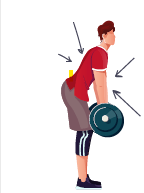

YOU KNOW YOUR CORE IS WEAK WHEN:
- Your back hurts
- You have poor balance
- You slouch all the time
- Your feet and wrists hurt
- You’re always holding your breath
HERE ARE A FEW EXERCISES YOU CAN DO WHILE ON BOARD TO IMPROVE YOUR CORE STRENGHT:
ABDOMINAL CRUNCH
- Lie on your back and place your feet on a wall so that your knees and hips are bent at 90-degree angles. Tighten the abdominal muscles.
- Raise your head and shoulders off the floor. To avoid straining your neck, cross your arms on your chest rather than locking them behind your head. Hold for three deep breaths.
- Return to the start position and repeat.

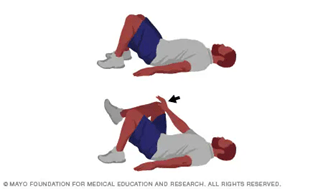
SINGLE-LEG ABDOMINAL PRESS
- Lie on your back with your knees bent (top right illustration). Keep your back in a neutral position, not arched and not pressed into the floor. Avoid tilting your hips. Tighten the abdominal muscles.
- Raise your right leg off the floor so that your knee and hip are bent at 90-degree angles. Rest your right hand on top of your right knee (bottom right illustration).
- Push your hand against your knee while using the abdominal muscles to push your knee toward your hand. Keep your arm straight. Hold for three deep breaths.
- Return to the start position and repeat using your left hand and left knee.
SINGLE-LEG ABDOMINAL PRESS VARIATIONS
- Opposite hand on opposite knee. Push your right hand against your left knee while pulling your knee toward your
- hand (top left illustration). You’ll be pushing and pulling across the centre of your body. Hold for three deep breaths. Then do the exercise using your other hand and leg.
- Hand on the outside of the knee. Place your left hand along
- he side of your left knee (bottom left illustration). Use your hand to push your leg inward. At the same time, create resistance by pushing your knee away from the centre. Hold for three deep breaths. Then do the exercise using your other hand and leg.


DOUBLE-LEG ABDOMINAL PRESS
When you’re comfortable with the single-leg abdominal press, try the double-leg abdominal press for more core strength:
- Lie on your back with your knees bent (top right illustration). Keep your back in a neutral position, not arched and not pressed into the floor. Avoid tilting your hips. Tighten the abdominal muscles.
- Raise your legs off the floor, one at a time, so that your knees and hips are bent at 90-degree angles. Rest your hands on top of your knees (bottom right illustration).
- Push your hands against your knees while using the abdominal muscles to pull your knees toward your hands. Keep your arms straight. Hold for three deep breaths.
- Return to the start position and repeat.
To stay up to date with OneCare Group news click here: https://onecaregroup.global/contact/
Follow Kypros Nikolaou, Strength and Endurance Coach for health,fitness tips and advice
http://www.ryltoday.com/: Core StrengthReferences:
- Ratamess N. Resistance training exercises. In: ACSM’s Foundations of Strength Training and Conditioning. 2nd ed. Kindle edition. Wolters Kluwer; 2022. Accessed June 16, 2023.
- Laskowski ER (expert opinion). Mayo Clinic. June 30, 2023.
- Fernandez-Rodriguez R, et al. Best exercise options for reducing pain and disability in adults with chronic low back pain: Pilates, strength, core-based and mind-body. A network meta-analysis. The Journal of Orthopaedic & Sports Physical Therapy. 2022; doi:10.2519/jospt.2022.10671.
- AskMayoExpert. Physical activity. Mayo Clinic; 2022.
- Harvard Health Publishing, The real-world benefits of strengthening your core (2012)
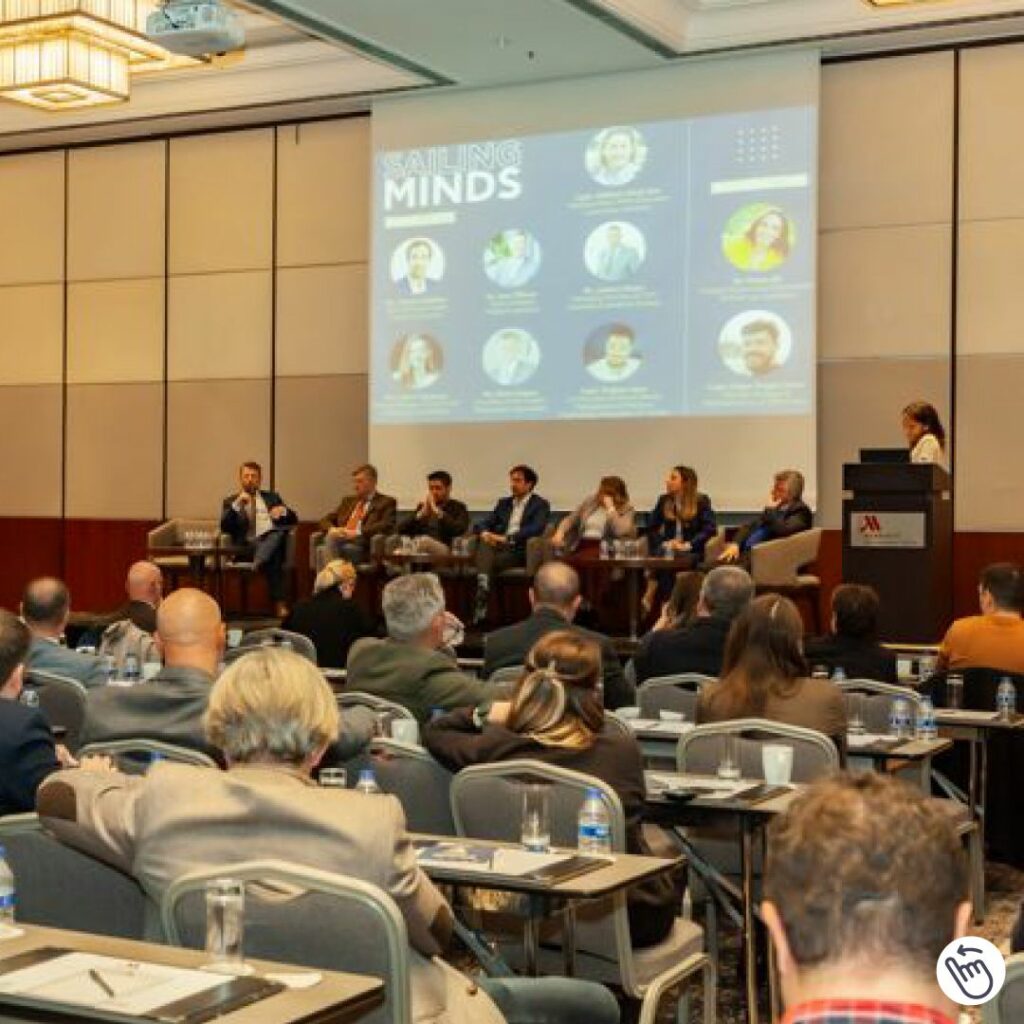
Join us for an afternoon at the Istanbul Marriott Hotel Asia to discuss mental health in the shipping industry through panels, conversations, and networking.
???? For registration:
https://lnkd.in/dP4qxtuM



- Slow down when eating: Chew your food well and take time to pause while you’re eating by putting your cutlery down between each mouthful. It may help you feel more relaxed and help you enjoy your eating experience. Slowing eating can allow your body to recognise when it is full.
- Avoid distractions: Avoid eating while you’re on your laptop, phone, reading or watching TV so that you can relax and enjoy your food in the moment.
- Reflect on your thoughts and feelings: Recognise when you are eating for reasons other than physical hunger. Sometimes emotions can trigger hunger and have a negative eating experience.
- Plan and stick to regular mealtimes: A meal planner helps to eliminate the stress around grocery shopping and meal preparation. Also, consider eating at regular times throughout the day. This helps to regulate your levels of hunger which could impact positively on your eating behaviours and food choices.
- Enjoy each mouthful: Food is more than just fuel. Take time to enjoy the aromas, the texture, and the flavours of your meal.
- Avoid empty calories: Choose nutritious foods that are satisfying to you, give you energy and are nourishing to your body.
- Avoid labelling foods: There aren’t ‘good’ or ‘bad’ foods, all can be part of a healthy diet if, we aim for variety and do not exceed our portion sizes.

If you’re visiting the Hellenic Maritime Forum and are intrigued by what OneCare Group can do for the mental health and well-being of your crew, do reach out to Managing Director Marinos Kokkinis at our booth!



Meet us at East Med Marine and Offshore Exhibition 2023
April 20th & 21st at the Grand Resort Limassol Cyprus
Our team will be at your disposal to discuss issues regarding crew health, well-being, and training.
OneCareSolutions addresses the full spectrum of seafarers’ health and well-being with 24/7 direct access to medical expertise and mental health support. Access to holistic wellness programs, assistance from public and physical health specialists, as well as support with medical supplies and tailored mental health and healthy lifestyle-related training.